
Who Bloody Mary is, why she is the most memorable antagonist in Fabletown, and how to survive the warehouse fight in the finale.
Bloody Mary
Bloody Mary is the reason The Wolf Among Us has a villain people remember. The Crooked Man is the plot; Mary is the threat. She is cheerful, unkillable and completely without a cause beyond enjoying the work, which makes her scarier than any mastermind with a grievance.
She is also the game's best action set piece. The warehouse fight in Cry Wolf is the only sequence where the remaster's rebuilt animation and lighting are doing something the 2013 version could not: a monster fight that reads as monstrous.
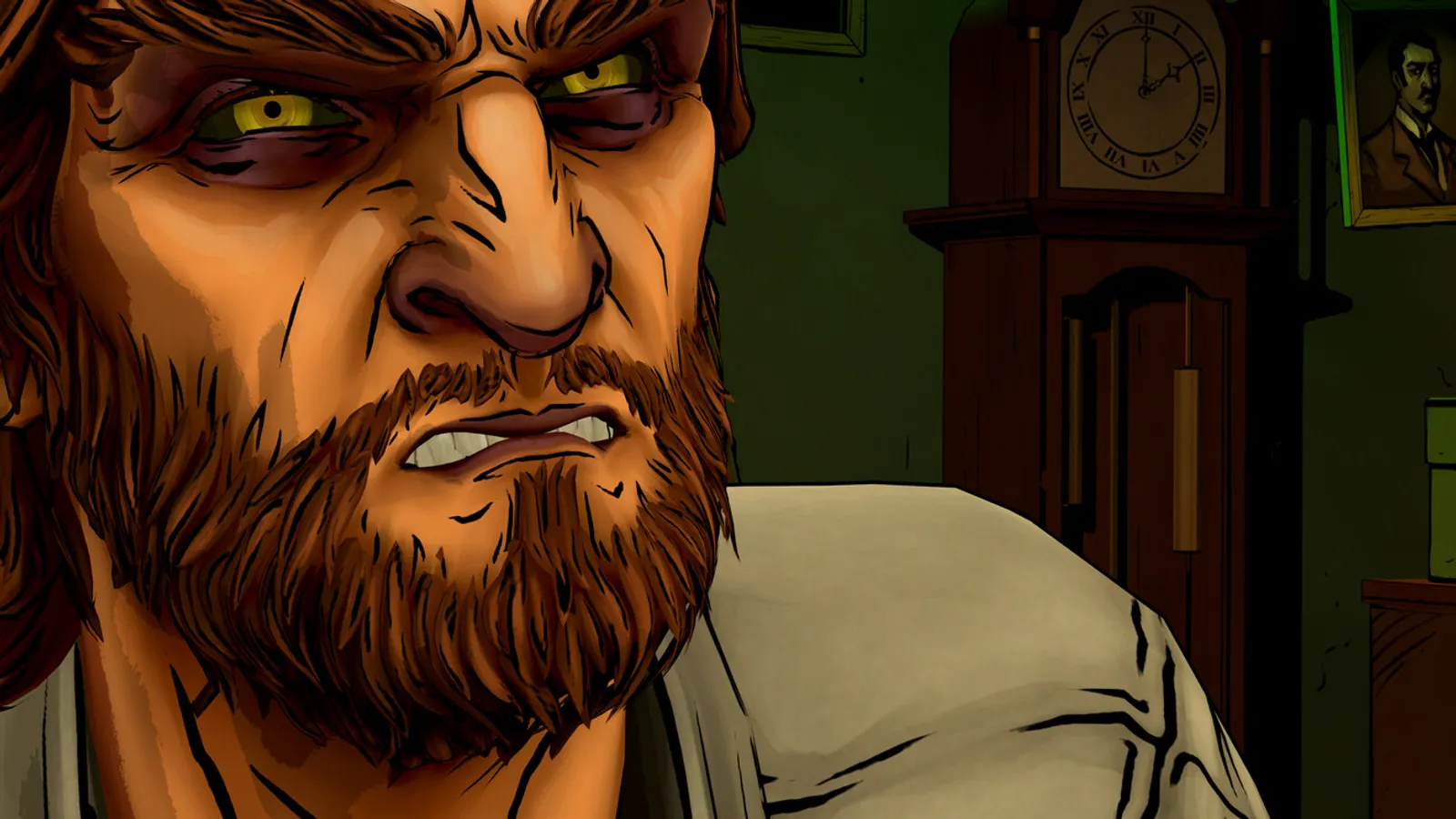
Origin
Bloody Mary is the mirror ghost of folklore: the figure summoned by saying her name in a dark bathroom, the reflection that is not quite yours. The game leans into that. Her scenes are full of mirrors, reflections and moments where she appears where she should not be.
In Fables terms, she is a fable who has made herself useful to the Crooked Man, and her loyalty is less ideological than appetitive. She likes hurting people, and the operation gives her permission.
Role in the story
Mary is the enforcer. She appears early as a threat in the background, becomes a physical presence in the middle episodes, and takes centre stage in the finale. She is the reason the case is dangerous rather than merely complicated: every scene she is in could turn violent, and several do.
Her relationship with the Crooked Man is professional. She is not his lover, his believer or his victim; she is the person he calls when a problem needs to disappear. That makes her the only character in the operation who is exactly what she appears to be.
Why she works as a villain
Three things make Mary effective:
- She enjoys it. Most villains in narrative games explain themselves. Mary does not. She is having fun, and the game lets her.
- She cannot be reasoned with. Every other antagonist in the season has a motive you can appeal to. Mary has none, which removes the player's usual tools.
- She is genuinely frightening in a game that is mostly conversation. The threat of violence is constant; Mary is where it becomes real.
The result is a villain who steals scenes without dominating the plot. She is not the mystery, and she is not the final choice; she is the cost of solving both.
Mary's best moments are not fights. They are the conversations where she appears in a reflection, or steps out of one, and the game lets you sit with the impossibility of it before anyone throws a punch.
The warehouse fight
The finale's fight is the only genuinely difficult action sequence in the game. Mary fights in her true form, and Bigby has to survive long enough to turn the tables.
Three tips:
- Stop attacking when she laughs. The prompt changes to a dodge, and attacking through it is what kills most players. Watch the prompt, not the animation.
- Use the environment prompts. The fight has scripted interactions with the warehouse; missing them extends the sequence and costs health.
- Expect a restart, not a game over. Failure returns you to the start of the sequence, so the cost is time rather than progress.
The fight ends with Bigby in wolf form, tearing her apart. It is the only full transformation in the game, and the remaster's animation work makes it land harder than the original did.
Does Mary die?
Yes. The warehouse fight is her last appearance, and she does not come back. The game gives her a final line and a final smile, and then the wolf finishes it.
That is unusual for a Telltale villain, who often return for a sequel hook. Mary's death is definitive, which makes the finale feel like a conclusion rather than a setup.
Mary in the remaster
The rebuilt lighting does more for her than for any other character. Her scenes are built around contrast — pale skin, dark rooms, red accents — and the remaster's re-authored lighting makes that contrast read at 4K instead of smearing into grey.
Noir Mode is a natural fit. The black-and-white presentation turns her into a classic horror image, and the mirror scenes become more unsettling without colour to explain them.
Official source: The Wolf Among Us Remastered on Steam
Playing against her
Mary is not a puzzle boss. She is a timing check and a tone test: the game wants you to feel outmatched, and the only way through is to stop trying to win the exchange and start reading the prompts.
If you are struggling, lower the QTE difficulty in the accessibility settings. The remaster added more granular options than the original had, and the fight is fully playable with longer windows.
Mary and the Crooked Man
The two villains are deliberately contrasted. The Crooked Man is a businessman who talks about community and runs an exploitation racket; Mary is the violence that makes the business possible. He pretends the operation is civilised, and she is the proof that it is not.
That is why the trial scene works: once Mary is dead, the Crooked Man has to face the people he has been selling to, and he has nothing left but words.
FAQ
Who is Bloody Mary?
The mirror ghost of folklore, reimagined as the Crooked Man's enforcer in Fabletown.
Does Bloody Mary die?
Yes. Bigby kills her in the warehouse in the finale, in his wolf form.
Is Bloody Mary the main villain?
She is the main physical threat. The Crooked Man is the architect of the operation.
How do you beat Bloody Mary?
Watch for the laugh cue, dodge instead of attacking, use the environment prompts, and expect the sequence to restart if you fail.
Bottom line
Mary is the character who makes the case feel dangerous, and the warehouse fight is the season's best action scene. She is the rare Telltale antagonist who is more interesting than the mystery around her. The Crooked Man page covers the other half of the operation, and the endings guide explains what happens after she falls.
Sources
More The Wolf Among Us Remastered Guides
Every way Cry Wolf can end, what the Crooked Man's sentence changes, and what the Nerissa whisper actually means. Full spoilers from here.
All five episodes in order, with release order, lengths, the case each one covers and what carries into the next. No endings spoiled.
About 10 hours for the story, 12 to 14 for a completionist run, and roughly two hours per episode. Here is how the remaster's pacing breaks down.
Who Nerissa is, what she does across the season, and the evidence for every reading of her final whisper. Full spoilers for the ending.
A boxed version is coming later in the 2026 holiday season, but Telltale has not confirmed contents, platforms or price. Here is what we know.
The Wolf Among Us Remastered costs $24.99, or $19.99 with the 20% launch discount. Here is the owner discount, regional pricing and physical status.
Yes, The Wolf Among Us Remastered is on PS5. Here is the price, how the PS5 build differs from PS4, trophy support and whether an upgrade exists.
The Wolf Among Us Remastered is out now on PC, PS5 and Xbox. Here is the exact date, how launch times work, and the Switch delay.